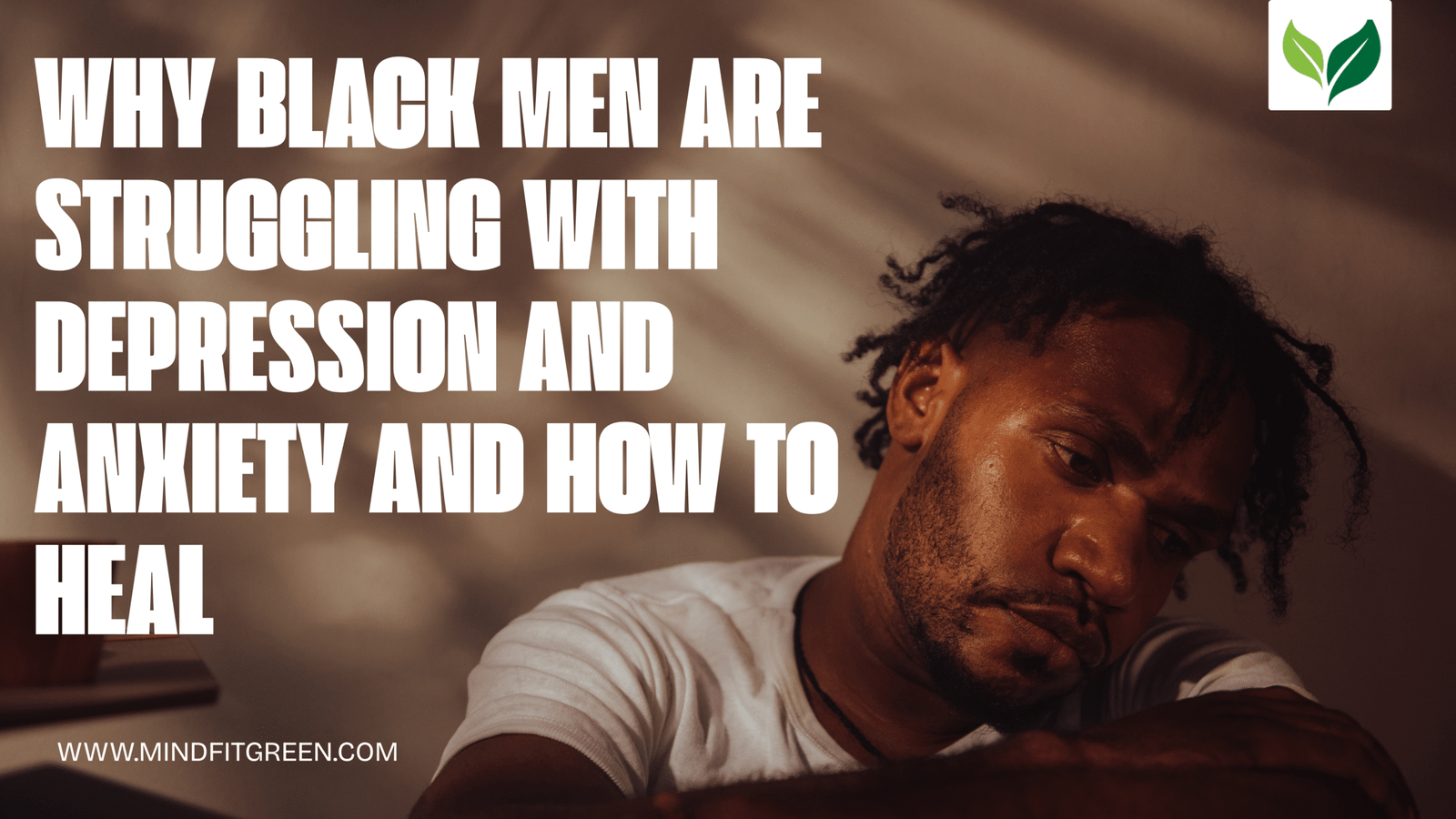
If you are a Black man reading this, I want you to pause for a moment. Take a deep breath. This conversation is for you. Not the version of you that everyone sees, but the version that carries the quiet weight behind the smile, the responsibility behind the strength, and the pain that rarely finds words.
Depression and anxiety are not signs of weakness. They are human experiences that do not care how tough, intelligent, or successful you are. They creep in quietly. Some days you feel tired for no reason. Other days you feel numb, like nothing really matters anymore. You laugh with friends, go to work, take care of your family, but inside, you feel like you are slowly losing yourself.
Why Many Black Men Suffer in Silence
Let’s be honest. In many Black communities, men are taught to be strong no matter what. You’re told to keep it together, never cry, never complain. “Man up.” “Be tough.” These words can become heavy chains. They teach you to hide your emotions until hiding becomes your normal way of living.
Society doesn’t always make it easier either. You might feel pressure to be the protector, the provider, the one who keeps everyone else together. You might fear being judged, misunderstood, or labeled weak if you admit you’re struggling. But here’s the truth, pretending to be okay does not make you strong. Facing your pain and choosing to heal does.
Recognizing the Signs of Depression and Anxiety
Many Black men experience depression and anxiety differently. It doesn’t always look like sadness or tears. Sometimes it looks like:
- Working endlessly but feeling empty inside
- Losing interest in things you used to enjoy
- Getting angry easily or withdrawing from people
- Trouble sleeping or sleeping too much
- Feeling hopeless, stuck, or disconnected from yourself
- Turning to alcohol, drugs, or sex just to escape for a while
If this sounds like you, please know that you are not broken. You are not weak. You are simply human, and you deserve peace just like anyone else.
The Role of Culture, Racism, and Stress
Living in a world where your existence is often questioned can be exhausting. Many Black men face racial trauma, discrimination, and social pressure that build invisible layers of stress. You learn to survive instead of heal. You learn to protect yourself emotionally, but not how to express what hurts.
Generational trauma also plays a role. Many of our fathers and grandfathers never had the space to talk about mental health. They carried their pain in silence, believing that endurance was strength. But you don’t have to carry that same burden. Healing is not betrayal, it’s liberation.
Steps Toward Healing and Emotional Freedom
1. Speak Up: Talk to someone you trust. It could be a friend, a counselor, or even your doctor. The first step toward healing begins with words. Speaking your truth breaks the power of silence.
2. Seek Professional Help: Therapy is not just for “crazy people.” It is for anyone who wants to understand themselves better. A Black therapist or culturally sensitive counselor can help you explore your emotions in a safe, judgment-free space.
3. Build Your Support Circle: Surround yourself with people who lift you up, not those who drain you. Brotherhood and community are powerful sources of healing.
4. Take Care of Your Body and Mind: Eat well, sleep enough, move your body, and practice mindfulness or prayer. Your physical and mental health are connected. Caring for one supports the other.
5. Give Yourself Permission to Feel: You are allowed to cry. You are allowed to rest. You are allowed to feel lost sometimes. Healing begins when you stop fighting your emotions and start understanding them.
Breaking the Stigma Starts with You
If you are reading this, I want you to know that your life matters. Your mental health matters. There is no shame in asking for help. There is no weakness in vulnerability. In fact, every time you choose to speak, to heal, to rest, and to grow, you give other Black men permission to do the same.
You are not alone in this journey. You are seen. You are valued. And you have the power to rise above pain and rebuild your peace.
Depression and anxiety do not define who you are. They are experiences that can be treated, managed, and healed. You deserve to live fully, not just survive. Today, choose yourself. Choose healing. Choose freedom.
If you are reading this, you may be carrying more than anyone realizes. You wake up, put on your armor, and face the world like nothing is wrong. You smile when people ask how you are doing, even when you are falling apart inside. You tell yourself you can handle it. You have always handled it. But lately, it feels heavier, doesn’t it?
You are not alone. Depression and anxiety are real. They do not skip over you because you are strong, successful, or responsible. They often hide behind that strength. And for many Black men, the silence surrounding mental health makes it even harder to breathe.
Why Mental Health Conversations Matter for Black Men
Let’s be real. Many of us grew up hearing that men should be tough. You were taught not to cry, not to talk about what hurts, not to show weakness. But what happens when life keeps throwing challenges your way, and you never get the chance to rest or express what you feel?
In our community, there is often this unspoken rule that you just have to “deal with it.” You keep pushing, working, providing, and protecting. But carrying everything alone is not strength. It is survival. And survival is not the same as living.
When you ignore your pain, it does not go away. It sits in your chest, builds up in your mind, and slowly drains your energy, focus, and joy. The truth is, acknowledging what you feel is not weakness. It is courage. It is the first step toward healing.
Black men face unique pressures that are rarely discussed openly. Society expects you to be strong, composed, and unshakable. You face racial discrimination, economic challenges, and sometimes the pressure to succeed without any emotional support.
You may feel like you always have to prove yourself at work, in your relationships, and even within your own community. That constant pressure creates an invisible tension that builds up over time. You start to feel anxious, restless, and sometimes detached. And because many of us are not taught to talk about emotions, we end up holding it all inside.
But holding everything in only makes the pain grow louder. Depression and anxiety do not disappear because you ignore them. They demand to be acknowledged. And if you do not address them, they will find a way to express themselves through anger, isolation, or exhaustion.
Recognizing the Signs You Might Be Struggling
Sometimes, depression and anxiety in men do not look like sadness. They can look like:
- Constant fatigue or low motivation
- Frustration and irritability over small things
- Withdrawal from family, friends, or activities you once enjoyed
- Trouble sleeping or sleeping too much
- Feeling empty or disconnected from life
- Using alcohol, drugs, or sex to numb emotional pain
If any of these sound familiar, it’s not because you are failing. It’s because you have been carrying too much for too long without help.
The Impact of Racism and Social Stress
Living as a Black man often means existing in a world that challenges your identity daily. The stress of racism, discrimination, and societal injustice can be deeply damaging to mental health. You may not even realize how much it affects you because you have learned to normalize pain.
You may have seen your father, uncles, or older brothers do the same, keep quiet, stay strong, and move on. But silence has never healed anyone. The weight of generations can stop with you. You can choose to break that cycle by choosing your peace and well-being.
How to Begin Healing
1. Talk About It: Speak your truth. Talk to someone you trust, a friend, a pastor, a counselor, or a therapist. Putting your pain into words helps you process it. It reminds you that your story matters.
2. Seek Professional Support: Therapy is not a sign of weakness. It is a powerful act of self-care. There are therapists who specialize in working with Black men and understand the cultural layers of your experience. Reaching out for help does not mean you are broken. It means you want to heal.
3. Practice Daily Care for Your Mind and Body: Take time to breathe. Eat well. Move your body. Pray or meditate. Rest without guilt. Your mental health and physical health are connected. Caring for one strengthens the other.
4. Build a Safe Circle: Surround yourself with people who see you, support you, and allow you to be yourself. Brotherhood and community can help you feel less alone.
5. Release the Need to Be Perfect: You do not have to carry everything. You do not have to be everything for everyone. You are allowed to pause. You are allowed to ask for help. You are allowed to heal.
You Deserve Healing Too
You have been strong for so long that you may have forgotten what peace feels like. You deserve to feel safe inside your own mind. You deserve joy that lasts longer than a moment. You deserve to heal.
This is your reminder that seeking help is not giving up, it is choosing life. There is no shame in admitting you need support. The real power lies in your decision to show up for yourself, to break the silence, and to begin again.
Black men, your mental health matters. Your voice matters. Your healing matters. You are not alone, and you are not invisible. Start where you are, with what you have, and take one small step toward peace today. Healing is not easy, but it is possible, and you are worth it.
Let’s Talk About What You Feel But Never Say Out Loud
If you are reading this, you might be wondering why you feel so tired all the time. Why even small tasks feel heavy. Why you can be surrounded by people and still feel empty. You may not have the words for it, but what you are feeling might be depression.
Depression does not always look like sadness. Sometimes it hides behind a straight face, a calm voice, or constant work. Sometimes it looks like silence, irritability, or emotional distance. And if you have been trying to “handle it” on your own, I want to tell you something important, you do not have to carry this weight alone.
What Depression Really Looks Like
Depression affects more than just your thoughts. It touches every part of your being, including your mind, emotions, behaviors, and even your body. When I speak to people who are struggling, I often help them explore these four areas to truly understand what is happening inside them.
1. What’s Going On in Your Mind
Your thoughts are powerful, and when you are depressed, they often turn against you. You might find yourself thinking, “What’s the point?” or “I’m not good enough.” You might replay past mistakes over and over or worry about the future endlessly.
You may notice your focus slipping or your memory fading. You start to doubt yourself more than ever. These thoughts are not who you are, they are symptoms of depression. When your brain is under emotional stress, it can distort how you see yourself and the world around you.
2. What’s Going On in Your Emotions
Emotionally, depression can feel like being trapped in a fog. Some days you feel sad and heavy. Other days, you feel nothing at all, just numb. You may cry more than usual, or you may not cry at all, even when you want to.
You may feel guilt or shame for not being strong enough or for not being the person everyone expects you to be. Sometimes you feel disconnected from everything you once loved, including your hobbies, your passions, and even your relationships.
If you find yourself feeling empty, hopeless, or unmotivated most days, please know this: your emotions are not betraying you. They are signaling that something inside you needs care and attention.
3. What’s Going On in Your Behavior
Depression often changes the way you act, even when you do not notice it. You may stop going out. You may isolate yourself, cancel plans, or stop answering calls. For some people, depression looks like overworking to avoid thinking or feeling. For others, it looks like losing interest in everything, including intimacy, motivation, or goals.
You might start eating too much or too little, using alcohol or drugs to numb the pain, or losing sleep because your mind will not stop racing. All these behaviors are ways your body and mind are trying to cope with emotional pain.
4. What’s Going On in Your Body
Many people forget that depression affects the body too. You may wake up feeling drained even after a full night’s sleep. Or you might find it hard to fall asleep at all. Some people experience unexplained aches and pains such as headaches, back pain, or tightness in the chest that have no clear medical cause.
Your appetite may change. You may eat too much or lose interest in food altogether. For some men, there is also a loss of sexual desire or performance. These changes are not random; they are your body’s way of showing distress.
Why You Feel This Way
Depression does not come from one single cause. It can result from many things happening at the same time, including emotional, physical, social, and spiritual factors.
It can come from long-term stress, financial struggles, family problems, or unresolved trauma. It can also run in families, which means genetics may play a role. Sometimes, it is linked to your diet, lifestyle, or even substance use.
And in our communities, the pain is often deeper. The ongoing impact of racism, social injustice, and economic hardship creates layers of pressure that affect the mind in ways many people never talk about. You are not weak for feeling this way, you are human, living in a world that has asked you to carry too much for too long.
How You Can Begin to Heal
1. Listen to Your Body and Mind: Pay attention to the signals. Your exhaustion, irritability, or emotional distance are messages from your body. They are not signs of failure. They are calls for rest, understanding, and healing.
2. Reach Out for Help: You are not supposed to fight this battle alone. Speaking to a mental health professional or trusted friend can help you see your situation from a new light. Therapy is not just about talking, it is about learning tools to manage your thoughts, emotions, and behavior in healthier ways.
3. Rebuild Your Strength through Small Steps: Start with small, consistent actions. Go for a short walk. Eat something nourishing. Write down what you are grateful for. Spend time in nature. Healing does not happen overnight, but every small choice you make in favor of your well-being matters.
4. Create a Safe Space for Yourself: Build a circle of people who make you feel seen and understood. Find spaces, whether online or offline, where you can express yourself without judgment. Healing begins when you stop pretending to be okay and start allowing yourself to be real.
If you take nothing else from this, take this truth: depression is not your fault. You did not choose it, but you can choose to face it. You can choose to seek help, to take care of your body, and to give your mind the compassion it deserves.
You are allowed to heal. You are allowed to feel. You are allowed to begin again.
Your story does not end in pain. It begins again in healing, strength, and the peace that comes from finally taking care of yourself in mind, body, and soul.
Understanding Depression, Family History, and Generational Trauma in Black Men
You Are Not Alone in What You Feel
If you have ever felt like something inside you was off but could not explain it, you are not alone. Maybe you have moments when everything feels heavy for no reason, when you wake up tired even after sleeping, or when joy feels like a memory from another life. You may have told yourself, “That’s just how I am,” or “That’s just the way we are in my family.” But what if it is not just the way things have to be? What if what you are experiencing is something that can actually be healed?
Many people believe depression is simply feeling sad, but it runs much deeper than that. Depression can be passed through families, shaped by trauma, and reinforced by silence. The truth is, depression and anxiety are not just personal struggles, they can also be inherited patterns, cultural wounds, and generational pain that no one ever taught us how to talk about.
The Power of Family History and Why You Should Talk About It
One of the hardest but most important conversations you can have is with your family about mental health. Too often, in our community, mental health is treated as a private matter, something to keep quiet about. You may have grown up hearing things like “we don’t talk about that,” or “he was just going through something.”
When families avoid conversations about emotional struggles, trauma, or addiction, important information is lost. You might not know if your father, mother, or grandparents struggled with depression, anxiety, or substance use. You may have seen the symptoms like anger, withdrawal, or silence, but never the truth behind them.
Knowing your family’s mental health history helps you understand yourself better. It allows you to recognize patterns early and take steps before things become overwhelming. Just as you would want to know your family’s medical history for heart disease or diabetes, it is just as vital to know the emotional and psychological history that runs through your bloodline.
Depression Is Not a Personality Trait, It’s Treatable
For generations, many have believed that feeling down, hopeless, or disconnected is simply part of life. You might have heard someone say, “We just have strong blood, we push through it.” But depression is not about weakness. It is not a flaw in character. It is a condition that affects the brain, body, and emotions, and it can be treated.
You do not have to live your entire life believing that sadness or exhaustion is your normal. Depression can be healed through therapy, healthy habits, emotional awareness, and sometimes medical treatment. Healing begins when you stop accepting pain as your identity.
Breaking Generational Silence and Pain
Many Black men and women carry not just their own pain but the pain of generations before them. This is called generational trauma, emotional wounds passed down through families and communities. These wounds come from centuries of oppression, racism, violence, and loss that were never fully acknowledged or healed.
You might have never thought about it this way, but that constant sense of vigilance, the feeling that you always have to prove yourself, or the exhaustion that comes from just existing in certain spaces, those are all symptoms of collective trauma.
When people say, “Why can’t Black people just move on?” they ignore the truth that the systems which caused harm have never fully disappeared. Racism still exists. Inequality still exists. The stress of navigating a world that questions your worth every day still exists. That pressure has a real impact on your mind and body.
Trauma that is ignored does not vanish. It lives in the body, shows up in our behaviors, affects how we love, how we parent, and even how we see ourselves. Healing starts when we acknowledge that this pain is real and that we deserve to be free from it.
How to Begin Healing from Family and Generational Trauma
1. Start Talking About It: Open the conversation with your family. Ask questions like, “Did anyone in our family ever struggle with sadness or anxiety?” or “Has anyone ever had issues with alcohol, drugs, or anger?” Talking about it does not bring shame, it brings clarity. It helps you see patterns and gives you the power to make new choices.
2. Learn to Recognize the Signs in Yourself: If you notice constant fatigue, loss of interest, irritability, or a deep sense of emptiness, those are signs that your mind needs attention. Do not dismiss them as being “just tired” or “just stressed.” These are emotional signals asking for care.
3. Seek Professional Help: Therapy gives you a safe space to unpack generational and personal pain. You can learn how to break old cycles, manage your emotions, and build new coping skills. You do not have to face your healing alone. There are therapists who understand the cultural and racial layers of what you are going through.
4. Acknowledge the Bigger Picture: Healing as a Black person means recognizing that you are not just fighting personal battles but historical ones too. Give yourself permission to rest. Give yourself permission to feel. You are carrying more than you realize, and it is okay to set that weight down.
You are not your father’s pain. You are not your mother’s silence. You are not your ancestors’ struggle. You are the one who can break the cycle.
Your healing is not just for you, it is for everyone who came before you and everyone who will come after you. By choosing to speak, to seek help, and to care for your mental health, you are rewriting the story of your bloodline.
You are not weak for wanting peace. You are brave for choosing it.
Breaking the Silence and Healing from Within
Facing What You Feel: The First Step Toward Healing
If you are reading this, I want you to take a deep breath. You are not weak for feeling what you feel. You are human. Many people go through life carrying silent pain, telling themselves to “just deal with it.” Especially for men, there is often a deep pressure to stay strong, hold everything together, and never show emotion. But holding everything in does not make you stronger. It makes you tired. It makes you sick. And it keeps you from living a meaningful life.
Depression and anxiety are not signs of weakness. They are signals from your mind and body that something inside you needs care, attention, and healing.
Most people think depression is just sadness, but it goes far beyond that. Depression can make you feel empty, disconnected, and heavy, like life has lost its color. You may find yourself losing interest in things you once loved or struggling to get out of bed in the morning.
What many people do not realize is that depression can run in families. If your parents, grandparents, or other relatives struggled with their mental health, you may be more vulnerable to it too. Sometimes families never talk about it. They may say “that’s just how we are,” without realizing it’s something that can be treated.
You deserve to know your family’s emotional history. Asking questions about what your parents or grandparents went through can help you recognize patterns early. The earlier you understand, the easier it becomes to heal.
The Hidden Weight of Generational Trauma
For many Black men and people of color, there is an additional layer to depression and anxiety, a weight that comes from generations of pain. Racism, oppression, and inequality have left emotional scars that pass down through families. Science shows that trauma can actually affect our DNA, making future generations more likely to experience depression, anxiety, and stress-related illnesses.
When people say “why can’t you just move on,” they often do not understand that you cannot move on from pain that is still happening. Racism is not just a story from the past. It continues to affect opportunities, income, safety, and mental health today.
You cannot heal what you refuse to acknowledge. Talking about it honestly and openly is not weakness. It is the beginning of breaking a cycle that has lasted too long.
Anxiety is more than just worrying. It is a constant state of fear about what might happen next. You might feel your heart racing, your hands shaking, or your mind running in circles. Sometimes it shows up as a fear of making mistakes or being judged by others. Other times, it hides in the body through headaches, stomach pain, dizziness, or tightness in your chest.
If you find yourself checking the door repeatedly to make sure it is locked or avoiding people because you fear embarrassment or judgment, those may be signs that anxiety is taking hold.
A little bit of anxiety can help you stay alert, but too much of it can steal your peace and make everyday life feel impossible. When anxiety starts to control your choices or keep you from doing things you love, that is when you need to pause and seek help.
The Physical Side of Emotional Pain
Your body remembers everything your mind tries to forget. When you push your emotions down instead of expressing them, your body starts to speak for you. Maybe you have constant headaches, stomach problems, or chest pain that doctors cannot fully explain. Maybe you feel tired all the time even when you sleep.
This happens because emotional pain changes your body’s chemistry. Stress hormones like cortisol rise, your heart rate increases, and your immune system weakens. Over time, this can lead to serious health issues like high blood pressure, heart problems, or chronic fatigue.
For many men, especially Black men who have been taught to “stay strong,” emotions often come out as anger or irritability instead of sadness or fear. It is not that you are an angry person. It is that your pain has not been given a safe place to rest.
Healing starts when you stop running from your emotions and start listening to them. You do not have to carry the world on your shoulders. You do not have to face everything alone. Talking to a counselor, therapist, or mental health professional is not a sign of weakness, it is an act of courage.
Start small. Talk to someone you trust. Write down what you feel. Give yourself permission to rest, to breathe, and to care for your mind the same way you care for your body.
You are not broken. You are healing. And healing is not a straight line, it is a journey that begins the moment you decide you deserve peace.
Depression and anxiety are not just emotional issues. They affect every part of your life, your relationships, your work, your physical health, and your future. But you can take control. You can learn, you can heal, and you can live fully.
You are not alone in this journey. The most powerful thing you can do today is acknowledge what you feel and take the first step toward help. Because your story is not over. It is just beginning.
Understanding the Hidden Connection Between Your Mind, Body, and Anxiety
Let’s be honest, most people do not take their stress seriously until it becomes unbearable. You might brush off the signs, tell yourself you’re fine, or think you can handle it on your own. But your body always knows when something is wrong. It speaks to you through tension, pain, and fatigue. When you ignore what your mind is trying to say, your body will find another way to express it.
If you have been feeling constant pressure in your chest, unexplained headaches, stomach pain, or a racing heart, your body might be telling you that you are overwhelmed. You may not always cry or break down emotionally, but your body will show you that it is tired of carrying so much.
When stress becomes chronic, it keeps your body in a fight-or-flight state. Your heart beats faster, your blood pressure rises, and your muscles stay tense. Over time, this can lead to serious health issues like high blood pressure, fatigue, and chronic pain. What you feel in your body is not random, it is your body’s way of saying, “I need peace.”
Many people underestimate how closely the mind and body are connected. When your mind is overwhelmed, your body reacts. When your body is tired or in pain, your mind feels it too. Everything is connected.
I’ve noticed that women tend to be more open to exploring this connection, through practices like yoga, journaling, or meditation. These are beautiful tools that help bring awareness to the body and calm the mind. But men, especially Black men, are often taught to push through pain and stay silent.
That silence comes with a cost. Ignoring your emotional health affects your physical health. You may not need to do yoga or meditate in the same way others do, but you need something that helps you slow down, breathe, and reconnect with your body. Whether it’s exercise, prayer, or simply taking quiet moments for yourself, finding your own form of release is vital for your well-being.
Understanding Anxiety: When Fear Becomes a Way of Life
Anxiety is not just about nervousness or fear. It’s a feeling that takes over your thoughts and body. You might find yourself constantly preparing for the worst or worrying about things that have not even happened yet. Anxiety is future-oriented fear, fear of what could happen, of what might go wrong.
For many Black people, that fear is not always imagined. It comes from real experiences, fear of being judged unfairly, mistreated, or misunderstood. Sometimes it comes from seeing things happen to others and thinking, “That could be me.”
You might question whether your fear is valid because people around you say, “That’s not realistic.” But your body knows it is real. When you see flashing lights behind your car or when someone looks at you suspiciously, your heart races for a reason. These experiences create cycles of fear and tension that are hard to break.
The truth is that anxiety can come from real and painful situations. Racism, discrimination, and microaggressions are not imagined, they are part of a lived experience that many face daily. You might not know what will happen, but you live with the constant pressure to always be cautious, to always be ready.
That kind of stress changes how you live. It can affect how you dress, how you speak, the music you listen to, or where you choose to go. It can shape your decisions in ways that feel safe but also limiting. When fear begins to control your choices and identity, anxiety has taken root.
The key question to ask yourself is this: How much is this fear affecting my life?
If it is shaping your actions, your thoughts, and your ability to feel at peace, then it’s time to pay attention.
There is a difference between healthy caution and overwhelming fear. Anxiety becomes a problem when it starts to control your thoughts or when you feel powerless to stop worrying. If your mind is constantly racing, if you find yourself avoiding situations, or if your body feels tense all the time, these are signs that anxiety is taking a toll on you.
The first step is recognizing what’s happening. Once you name it, you can begin to manage it. Anxiety loses some of its power when you acknowledge it instead of fighting it silently.
How to Calm Your Mind and Reclaim Control
When anxiety takes over, your brain’s emotional center called the amygdala becomes overactive. This makes it hard to think clearly or make decisions. To calm this part of your brain, you need to bring your body back into balance.
Start with your breath. Slow, deep breathing tells your body that you are safe. You can also try grounding techniques like counting backward from ten, naming five things you see around you, or feeling your feet firmly on the floor. These small actions can help your mind come back to the present moment.
Find what works for you, maybe it’s prayer, talking to someone you trust, exercising, or journaling your thoughts. Every small effort you make to regulate your emotions strengthens your control over your anxiety.
Remember, anxiety does not mean you are broken. It means your mind has been working too hard to protect you. It’s time to teach it that you are safe now.
Anxiety and depression are not weaknesses, they are reminders that you need care. Your body, mind, and spirit all deserve rest and understanding. You do not have to push through everything alone. Seeking help is not a failure. It is a choice to heal, to live freely, and to take back your peace.
Start today. Listen to your body. Speak your truth. And remember that healing is not about being perfect, it is about learning to be at peace with yourself again.
A Personal Guide to Healing and Awareness
There are moments in life when you may feel low, disconnected, or simply tired of everything around you. It’s normal to feel sad or drained at times. Life comes with its highs and lows, and sometimes your emotions just need space to breathe. But when that sadness begins to take control of your thoughts, your sleep, your energy, and even your will to keep moving forward, it’s time to pause and listen to what your mind and body are trying to say.
Depression and anxiety are not weaknesses. They are messages. Your brain and your emotions are telling you that something within needs care and attention. And you are not alone in this.
Many people use the word “stress” as a simple explanation for how they feel. “I’m just stressed,” they say. But sometimes, what feels like stress is actually depression or anxiety. You may notice your body is always tense, your thoughts race nonstop, or you feel a heavy weight inside that you can’t quite explain.
If you’ve found yourself saying things like, “I just can’t do this anymore,” or “I wish I could sleep and not wake up,” those words are signals. They’re not just passing thoughts, they’re calls for help from deep within. These moments deserve compassion, not judgment.
Depression often hides behind everyday habits. Maybe you push yourself too hard because you want everything to be perfect. Maybe you tell yourself you’re not enough when you make mistakes. Over time, that constant pressure turns into guilt, shame, and hopelessness. Anxiety can grow from the same soil, feeding on the fear that you’re not doing enough or that you’ll lose everything if you stop trying.
How Your Mind, Emotions, and Body Work Together
Depression and anxiety are not just mental; they affect your whole body. You may feel physically drained, experience headaches, changes in appetite, or have trouble sleeping. You might even feel disconnected from the things you once loved.
When you live in survival mode for too long, your brain begins to lose balance. The hormones that help you feel joy, calm, and focus begin to drop. The smallest tasks start to feel impossible. And sometimes, the only thing you want is to stop feeling altogether.
But this is not the end. These are signs, important ones. They mean your body is asking for rest, your heart is asking for healing, and your soul is asking for peace.
Sometimes people don’t realize when their thoughts have moved from sadness into something more serious. If you ever catch yourself thinking, “I wish God would just take me,” or “Maybe the world would be better without me,” those thoughts matter. They are a sign that life feels too heavy to carry alone.
It might sound spiritual, even humble, to say you’re ready to go, but beneath that is often a quiet cry of hopelessness, a sign that you no longer see your purpose or value. And that is not who you truly are. You are not your pain, and you are not your past. You are someone who deserves healing and peace.
If you’re reading this and realizing that you’ve been living in this cycle of exhaustion, guilt, or sadness, know that healing is possible. It begins by acknowledging that something is not right and by choosing to seek help.
Talk to someone you trust, a counselor, a friend, or a mental health professional. Open up about what you are feeling. You do not have to fight this alone. Depression and anxiety lose their power when they are no longer hidden in silence.
What You Can Start Doing Today
- Pause and breathe. Slow your mind when it begins to spiral.
- Rest without guilt. Rest is not laziness; it’s recovery.
- Write what you feel. Sometimes putting your thoughts on paper brings clarity.
- Stay connected. Isolation deepens pain, but connection heals it.
- Seek professional help. Therapy or counseling is not weakness, it’s wisdom.
Every emotion you feel has meaning. Every tear you shed is a message. Depression and anxiety are not your identity; they are experiences that can be healed with the right care and understanding.
You are still here, and that means there is still hope. Even when you feel you’ve lost control, remember that healing begins the moment you decide to reach for help.
You are not alone. You are worthy of peace. And your life still has purpose, even on the days it feels hard to believe.
A Real Conversation on Depression and Anxiety in Black Men
Depression and anxiety do not always show up as tears or silence. Sometimes they look like strength, like holding everything together when you are breaking inside. Sometimes they look like working two jobs, showing up every day, and pretending everything is fine when you are barely breathing.
I want to talk to you directly, to the one who feels tired but keeps going anyway. To the one who feels like there is no time to rest or ask for help. To the one who has been told that being strong means staying silent.
It’s time to talk about what’s really happening inside.
You may call it stress. You may tell yourself, “I just need to push through.” But when that stress does not go away, when your body feels heavy and your mind won’t stop racing, it might be something deeper. Depression and anxiety often hide behind the word stress.
You may feel disconnected from your purpose, unsure of who you are, or what your life really means anymore. You might not see the point in trying, or maybe you wish you could sleep and not wake up. These thoughts are painful, but they are not random. They are signs that your heart and mind are overwhelmed and in need of care.
You do not have to carry that pain alone. Help exists, and it is closer than you think.
If you ever reach a point where you are thinking of ending your life or feel like you have no reason to go on, please stop and reach out. Search “suicide hotline” on Google and you will see numbers and chat options that appear right away. Someone is always there to listen, to help, to remind you that your story is not over.
You can also talk to your doctor, a counselor, or a trusted friend. You do not have to face this silently. Speaking up is not weakness. It is the first real act of strength.
As a black man, you may feel like you have to hold everything together, to be the provider, the protector, the one who never falls apart. Society tells you that real men don’t cry, that they keep pushing no matter what. But these messages create a silent war inside.
You are not a machine. You are human. You feel deeply. And sometimes, the pressure to live up to every expectation becomes too heavy to carry.
Your identity as a man and your experience as a black person both shape how you see yourself. The constant demand to be strong, to succeed, to never show pain, builds invisible walls around your emotions. When you cannot meet those expectations, it can lead to feelings of guilt, shame, and failure. That is where depression begins to grow.
Taking a Step Back to Understand Yourself
Before you can heal, you must first understand what you are feeling. Ask yourself:
- What pressures am I living under every day?
- What does success really mean to me, not what the world says, but what I believe?
- How have my family, my friends, or society shaped the way I see myself as a man?
- Do I feel free to express how I feel, or do I hide it because I fear judgment?
When you begin to ask these questions honestly, you open the door to healing.
Your mind and body are connected. When your thoughts are heavy, your body responds. You might feel constant fatigue, headaches, body pain, or loss of appetite. Sometimes, this is your body’s way of saying it needs care.
Take small steps:
- Move your body. Exercise helps release tension and lifts your mood.
- Eat better. You deserve good nutrition, even when access to healthy food feels limited.
- Breathe deeply. Learn breathing techniques to calm your mind when anxiety hits.
- Rest. Rest is not a luxury; it is part of your survival.
You may also face challenges that are beyond your control, such as systemic racism, limited access to health care, or the struggle to find time while working multiple jobs. These realities are heavy, but you can still take control of what you can change, one small step at a time.
Rewriting the Story of Strength
Real strength is not silence. Real strength is honesty. It is saying, “I need help.” It is giving yourself permission to cry, to rest, to heal.
You are allowed to feel pain. You are allowed to be vulnerable. You are allowed to seek help without shame.
Because healing is not about becoming someone else. It is about becoming whole again, the person you were before life told you to hide your heart.
If you feel lost, please remember this: your life still has meaning. Even when you cannot see it, even when the world feels too dark to stand in, your story is still unfolding.
You were never meant to face this journey alone. There is help. There is healing. And there is hope always.
Finding Balance in Your Mental Health Journey
Mental health is not one-size-fits-all. What helps one person heal may not work the same way for someone else. The truth is, every mind is different, every story is unique, and every journey toward healing begins with one important step, understanding yourself.
If you are reading this, maybe you are trying to make sense of what you feel. Maybe life feels heavy and you do not even know where to begin. Let’s start here, together.
It is easy to get caught up in what society tells you happiness should look like. A good job, a family, money, or status. But pause for a moment and ask yourself: What truly makes me happy?
Is your version of happiness something that comes from your heart, or is it something that was handed down by the world around you? Many people live with the pressure of trying to become what others think they should be. That constant chase often leads to exhaustion, anxiety, and depression.
Start by checking in with yourself daily. Ask simple but powerful questions:
- How am I feeling today?
- What made me smile today?
- What made me feel heavy or drained?
- Am I living by my values or someone else’s expectations?
This small act of self-awareness can open the door to deeper healing.
It is true that therapy can be expensive and not always accessible for everyone. That alone can make people shut down before they even begin. But healing does not always start with therapy. There are things you can do, right now, to care for your mental well-being.
1. Move Your Body: Exercise is not just for fitness. It is medicine for your mind. A short walk, a few stretches, dancing in your room, all these things can reduce stress and help you reconnect with your body.
2. Breathe Deeply and Often: Breathing is the simplest, most powerful way to calm your nervous system. When anxiety builds up, stop and take slow, deep breaths. Let your body feel safe again.
3. Eat With Awareness: Food affects mood more than most people realize. Many communities face what we call food apartheid, limited access to healthy, affordable food. When your body lacks nutrients, your brain struggles too. Try small changes when possible: drink more water, eat more fruits or vegetables, and limit processed foods.
4. Ask Yourself Honest Questions: Do not rush to fix yourself. Take time to understand why you feel what you feel. Is your sadness connected to loss, pressure, fear, or loneliness? Healing begins when you stop running from the truth and start listening to your emotions.
How to Manage Anxiety and Break the Cycle of Fear
Anxiety often shows up when your mind tries to protect you from something it believes is dangerous, even when there is no real danger. It is a fear of what might happen, a constant worry about things you cannot fully control.
There are situations in life that we simply cannot avoid: work stress, school pressure, family conflict, or financial struggles. The goal is not to erase these challenges but to change how you respond to them.
Recognize Your Triggers
Start noticing when anxiety shows up. Is it before you speak to certain people? When you face financial stress? When you are about to make a big decision? Understanding your triggers helps you prepare instead of panic.
Avoid Avoidance
When you avoid what makes you anxious, your brain learns that avoidance equals safety. That cycle gets stronger over time and can make anxiety worse. Try facing small fears gradually. Each time you do, you weaken anxiety’s control over you.
Be Mindful of Quick Fixes
When anxiety becomes too much, it is tempting to numb it with alcohol, drugs, or distractions. It might help for a moment, but your mind soon learns to depend on those habits. Pay attention to when you reach for these things, they often point to deeper pain that needs attention, not avoidance.
Building a Healthy Relationship With Yourself
Healing does not happen overnight. It is not about perfection. It is about learning how to treat yourself with kindness, patience, and respect.
Ask yourself:
- What does peace look like for me?
- How can I bring more calm into my day?
- What habits keep me stuck, and which ones move me forward?
Your answers may surprise you. They may even reveal that the life you want is still possible, just hidden beneath layers of pain and expectation.
You have survived many things that once felt impossible. That means you already carry strength within you. Healing is not about being strong for others anymore. It is about being honest with yourself.
You deserve rest. You deserve peace. You deserve joy that lasts.
So take a moment. Breathe. Stretch. Eat something that nourishes you. Speak kindly to yourself. And remember, your journey is not about doing everything perfectly. It is about learning to live fully in truth, in love, and in balance.
Depression, Anxiety, and Substance Use in Black Men: Breaking the Cycle of Avoidance
If you are reading this, it means you are taking a moment to reflect on your mental and emotional well-being. That alone is a powerful step. Many Black men live with deep emotional pain, hidden behind laughter, hard work, and strength. You might not call it depression or anxiety. Maybe you just say, “I’m tired,” “I’m stressed,” or “I’m fine.” But deep down, you know something doesn’t feel right.
What often happens is that instead of facing the pain, you might look for a quick way to quiet it. It could be alcohol, weed, pills, or even endless scrolling on your phone. For a short time, it feels like relief. The noise quiets down. The weight feels lighter. But when the effect wears off, the pain returns, often stronger than before.
Avoidance can feel like coping, but it is not healing. It traps you in a cycle where the stress, depression, and anxiety never go away. Instead of facing what’s causing your pain, the habit of avoidance starts to control you. It may begin as comfort but slowly becomes a chain.
How Avoidance Fuels Depression and Anxiety
When You Numb the Pain, You Numb the Healing Too
When you drink or use substances to “escape,” what you are really doing is teaching your brain to avoid discomfort. The brain begins to believe that the only way to feel better is through that substance. Over time, it becomes a reflex, stress equals drink, sadness equals smoke, anxiety equals pop something. But while it feels like a solution, it quietly keeps you stuck in the same emotional space.
The truth is, avoiding your emotions does not erase them. It only delays the healing you deserve. Every time you avoid the source of pain, you give it more power. Depression grows in silence. Anxiety thrives in avoidance. The real strength lies not in suppressing your emotions but in understanding and managing them.
For many Black men, substance use and mental health challenges exist in a system that was not built to protect them. The reality is harsh. In some neighborhoods, a young Black man caught with a small amount of weed ends up in a police station. In another neighborhood, a white teenager gets a warning and goes home. The system is unequal.
This double standard adds another layer of fear and mistrust. You might think, “Why should I go to therapy? Why should I talk to a doctor who might not understand me?” That feeling is valid. The truth is, Black men have every reason to feel cautious. The health care system has a long history of being untrustworthy to Black communities.
But here’s what I want you to know: taking care of your mind is not giving up control. It is reclaiming it. You are not weak for needing help. You are not “crazy” for wanting peace. Seeking healing is not surrender, it is survival.
Facing the Truth About Substance Use
Let’s be real. Sometimes when you say, “I just had a few drinks,” it might actually be more than that. Or when you say, “I only smoke when I’m stressed,” it might be every day. This isn’t about shame. It’s about awareness. You deserve to know what is really going on inside you.
Alcohol and drugs may seem like your friend, but they don’t care about your health, your family, or your peace. They give you a short escape but take away long-term control. They damage your body, your relationships, and your ability to cope in healthy ways.
You cannot heal from pain you keep numbing. You cannot grow from problems you keep running from.
Building Healthier Coping Strategies
Healing begins when you face your emotions instead of avoiding them. You don’t have to figure everything out today. Start small.
1. Talk About What You Feel: Find a safe space to open up. It could be a therapist, a friend, a pastor, or even a journal. Speaking your truth is not weakness, it is courage.
2. Reconnect With Your Body: Your body holds the stress you carry. Move it through exercise, walking, stretching, or breathing deeply. Physical activity releases tension and builds emotional strength.
3. Replace the Habit: Instead of reaching for a drink or joint, try something grounding. Cold water on your face, a short prayer, or deep breathing for sixty seconds can shift your emotional state.
4. Give Yourself Grace: Healing takes time. You may slip, and that’s okay. What matters is that you keep coming back to yourself, again and again. Each time you choose awareness over avoidance, you grow stronger.
Many Black men say, “I don’t trust doctors” or “Therapy isn’t for people like me.” But mental health care is not about giving someone else control, it is about learning tools to regain your own. You deserve a chance to live without constantly feeling on edge, exhausted, or numb.
You deserve peace. You deserve healing. You deserve to feel alive again.
If you are struggling, do not wait for a crisis. Talk to someone today. There are therapists and counselors who understand what you are going through. Your healing does not have to be perfect. It just has to begin.
Avoidance may have protected you once, but it cannot heal you now. Facing your pain is hard, but you do not have to face it alone. Every moment you choose to confront your emotions instead of numbing them, you are rewriting your story.
You are not your habits. You are not your mistakes. You are a human being who has carried pain for too long. And now, it is time to heal.
How Black Men Can Navigate Mental Health Care Without Losing Their Voice
If you have ever sat in a doctor’s office and felt like no one was really listening to you, you are not alone. Many Black men have felt that same frustration. Too often, you are told what to do instead of being asked how you feel. You are handed a prescription instead of being invited into a real conversation. That kind of experience can leave you feeling powerless and unseen.
When you are already dealing with depression, anxiety, or stress, the last thing you need is to feel ignored. Healing is not about someone telling you what to do. It is about being heard, understood, and guided through your journey. Mental health care should not be something done to you. It should be something done with you.
For generations, Black men have been told to “be strong” and “tough it out.” When they finally reach a point of seeking help, being met with authority instead of compassion feels like another form of control. It is not collaboration, and it is not healing.
When a professional talks at you instead of with you, it sends a message that your experience does not matter. That kind of environment can make anyone shut down emotionally. You start thinking, “Why bother talking? They already made up their mind.”
But you deserve better than that. You deserve care that is collaborative. You deserve to be a partner in your own healing.
How Bias and Misunderstanding Affect Mental Health Diagnoses
There are still serious gaps in how the mental health system treats Black men. Research shows that providers sometimes act more “paternalistic” toward Black patients, meaning they take control instead of working together. This can lead to miscommunication, misdiagnosis, and mistrust.
Imagine being honest about your fears, like saying you do not feel safe around police, and being told that your fear is a “delusion.” For a Black man, that fear is not imaginary. It is lived experience. When doctors and therapists fail to see that, it causes harm. It also reinforces the belief that “they don’t understand us.”
That is how stigma grows. It is not that Black men are naturally mistrustful, it is that the system has been untrustworthy. And when people feel misunderstood, they turn away from the very care they need.
How It Impacts Black Men’s Mental Health
Misdiagnosis is not just a paperwork mistake, it can shape how you are treated for years. Many Black men have been labeled with conditions that do not reflect their true experience. Sometimes, symptoms of trauma or fear are mistaken for aggression or psychosis. Other times, spiritual expressions are misunderstood as mental illness.
This pattern feeds a dangerous cycle: men stop seeking help because they fear being judged or labeled. And when that happens, depression and anxiety deepen in silence.
You deserve care that sees the full picture of who you are, your background, your experiences, your faith, and your pain.
How to Begin the Journey Toward Healing
Healing starts when you take back your voice. You may have tried to handle things on your own, but sometimes self-help is not enough. That does not mean you are weak. It means you are human. Here are some ways to start finding help that truly supports you.
1. Talk to Your Primary Care Provider: If you already have a doctor, that can be your first step. You do not need to know all the right words. Simply say, “I haven’t been feeling like myself lately.” That small sentence can open a bigger conversation about your emotional well-being. Your doctor can refer you to a therapist or counselor covered by your insurance.
2. Find a Culturally Sensitive Therapist: Look for professionals who understand what it means to be a Black man in today’s world. You can use platforms like:
- Therapy for Black Men (therapyforblackmen.org)
- Therapy for Black Girls (yes, men are welcome to explore too)
- Psychology Today, where you can filter therapists by race, gender, and specialty
These platforms allow you to find someone who listens without judgment and respects your lived experience.
3. Speak to People You Trust: Sometimes the people around you notice changes before you do. Talk to someone who cares about you. Ask them, “Have you noticed me being different lately?” Honest feedback can help you see what stress or sadness has been doing to you.
4. Ask Questions and Stay Involved: If you ever start therapy or medication, remember that your voice matters. Ask questions. Speak up if something doesn’t feel right. A good mental health professional will listen, explain, and adjust your care plan with you, not for you.
You have every right to feel hesitant. The history of racism in health care is real. But part of reclaiming power is making the system work for you. Change happens when you bring your truth into those spaces. You deserve care that honors your story, not erases it.
Your mental health journey does not have to be lonely or dictated by others. It should be a partnership—one where you are seen, heard, and respected.
You are not your diagnosis. You are not the stereotypes placed on you. You are a human being who deserves peace, balance, and emotional safety.
If you have been carrying pain in silence, know that help exists, and it can be built around your truth. Do not wait for things to fall apart before you reach out. You are allowed to ask for help before it becomes an emergency.
Healing begins when you choose to be part of your own story again. And that story is not over—it is just beginning.
How to Seek Mental Health Support and Protect Your Privacy
If you are reading this and quietly battling with your emotions, I want you to know that you do not have to face it all by yourself. Too many people, especially Black men, carry the weight of their pain in silence. You push through work, family, and responsibilities, trying to hold everything together, but deep down, the pressure keeps building.
At some point, that weight starts to leak out in ways you might not even recognize. Maybe you find yourself getting angry more easily. Maybe you drink or smoke more to escape the noise in your mind. Maybe you feel disconnected from people who care about you. All of these can be signs that your emotional load has become too heavy to carry alone.
The truth is, healing starts with connection. Reaching out to others is not a sign of weakness, it is a step toward strength.
Taking a Mental Health “Temperature Check”
Why Checking in Matters
Sometimes, you might not realize how much you are struggling until someone points it out. That is why I always encourage you to do a “temperature check” with the people you trust. Ask them questions like, “Do you think I’ve been different lately?” or “Do you think I’m overreacting?” These conversations can open your eyes to patterns you might have missed.
We all express our emotions differently, and in the Black community, our language for emotions can be powerful and unique. Whether you say, “I’m tired,” “I’m stressed,” or “I’m tripping,” there is often something deeper underneath those words. Finding someone, especially a therapist, who understands that language can make all the difference.
Building Safe Spaces to Talk
Starting with a Trusted Circle
Healing can begin in small, familiar spaces. I have seen people start men’s groups in their churches, mosques, or community centers where they come together to talk about life, pain, and faith. Sometimes, just sitting with people who get it helps you realize that you are not alone.
These kinds of groups can also help you decide when it is time to reach out for professional help. When people you trust say, “Maybe it’s time to see a therapist,” you might be more open to it because it is coming from a place of care and understanding.
Finding the Right Mental Health Professional
Where to Start
Finding a therapist can feel overwhelming, but there are several paths you can take:
1. Talk to Your Primary Care Provider (PCP): Your doctor can help you find mental health professionals covered by your insurance. You can simply say, “I haven’t been feeling like myself lately,” and they will guide you through the next steps.
2. Use Trusted Online Platforms: Websites like Psychology Today, Therapy for Black Men, Therapy for Black Girls, and InnoPsych allow you to filter therapists by race, gender, location, and insurance coverage. You can even find someone who specializes in working with men from diverse backgrounds.
3. Check Your Job’s Employee Assistance Program (EAP): Many people forget this, but your workplace may already offer access to free or low-cost therapy through an EAP. These programs are completely confidential. Your employer will never know the details of what you discuss. The EAP team will simply connect you with qualified professionals outside of your workplace.
4. Ask for Recommendations: Talk to people who have gone through therapy. Ask how they found their therapist, what the process was like, and what to expect. Sometimes, personal recommendations can make your search easier.
Understanding the Cost and Accessibility
Finding therapy can take time. Some therapists may not have openings, especially if they are in high demand. Paying out of pocket can also be expensive, but there are options:
- Look for community clinics or nonprofits that offer sliding-scale fees based on your income.
- Explore teletherapy platforms that may provide more affordable online sessions.
- If you have insurance, use your provider’s website, but know that it can take patience to find someone available.
It might feel like searching for a needle in a haystack, but don’t give up. Your peace is worth the effort.
Protecting Your Privacy in Mental Health Care
Understanding Confidentiality
If privacy is one of your concerns, let’s make it clear: your therapist or doctor is legally required to keep your information confidential. Under federal law, anything you share in therapy stays between you and your provider.
The only exceptions are if you are in danger of harming yourself or someone else, or if a child or vulnerable adult is being abused. Outside of those rare situations, your personal struggles remain private.
When you reach out to friends or family for support, think carefully about who you trust. Some people mean well but may not know how to keep your struggles confidential. Choose those who respect your privacy, who listen without judgment, and who do not use your pain as gossip.
When to Reach Out for Help
If you have been feeling hopeless, numb, or emotionally disconnected for a while, that is your sign. You do not need to wait until things get worse. Talk to your doctor, your therapist, or someone you trust. You can even call a mental health helpline if you are unsure where to start.
Your emotions are valid. You do not need to justify your pain to anyone. You have the right to feel safe, supported, and heard.
You do not need to have everything figured out to begin healing. Sometimes the first step is simply saying, “I need help.” The moment you speak those words, you break the silence that has kept you trapped.
Remember this, you are not weak for seeking help. You are strong for facing what most people run from. Healing is not about pretending everything is fine. It is about finding peace, one honest conversation at a time.
Take that first step today. Talk to someone. Find your safe space. You are worth the effort, and your healing matters.
A Personal Guide to Mental Health and Healing
When you reach a point in life where your emotions feel too heavy to carry, I want you to know something important, you are not alone. Many people go through silent battles, unsure of who to talk to or where to turn. Mental health struggles are real, and acknowledging that you need help is not a sign of weakness. It is one of the most courageous steps you can ever take.
Recognizing When It’s Time to Reach Out
If you’ve been feeling emotionally drained, disconnected from people, or constantly weighed down by thoughts that you cannot shake off, your mind is asking for help. Depression, anxiety, and other mental health struggles can sometimes be hard to recognize because they don’t always appear as sadness or panic. They can look like exhaustion, irritability, overthinking, or simply losing interest in things you once loved.
Sometimes, people think they are just “stressed” or “tired,” but deep down, it may be more than that. When stress starts to control your mood, sleep, or relationships, it might be time to talk to someone.
One of the hardest things about healing is opening up. You may worry about being judged or misunderstood, especially if you have been told to “stay strong” or “just deal with it.” But healing starts with connection.
Talk to someone you trust, such as a close friend, family member, or even a spiritual leader, but be mindful of who that person is. Not everyone is equipped to hold space for your emotions, and that’s okay. Choose someone who listens without judgment, someone who makes you feel seen, not small.
If you are not sure where to start, consider reaching out to a therapist or counselor. You can look for professionals through platforms like Psychology Today or InnoPsyc, or even check your insurance provider’s network. It may feel overwhelming at first, but finding the right therapist can truly change your life.
For those with jobs, remember that many workplaces offer Employee Assistance Programs (EAPs). These programs often provide confidential therapy sessions at no cost, and they can even help you find the right therapist based on your background and preferences.
You might feel more comfortable starting therapy from home through telehealth. This can make it easier to open up, especially if walking into a therapist’s office feels intimidating. However, make sure you have a quiet, private space where you can talk freely. If your home is crowded or noisy, going to the therapist’s office might actually give you the privacy and peace you need.
Both in-person and virtual therapy can be powerful tools for growth. What matters most is your comfort and your willingness to engage in the process. Healing doesn’t happen overnight, but every conversation you have about your mental health is a step toward freedom.
There is often fear or stigma around taking medication for mental health. You might wonder, “Will I be on this forever?” or “Does this mean I’m weak?” The truth is, medication is not about weakness. It’s about giving your brain the support it needs to stabilize and function more effectively.
If you ever consider medication, make sure you discuss it with a qualified professional, someone who explains how it works, what to expect, and how long you might need it. Some people only need medication for a short period, while others may benefit from it long-term. What’s important is that it’s part of a bigger plan that includes therapy, lifestyle changes, and support.
Medication doesn’t erase your pain or trauma, but it can help you manage it. Think of it as turning down the volume of chaos in your mind so that you can focus on healing. You are always in control, and you can discuss any concerns or side effects with your provider at any time.
The Importance of Privacy and Safe Healing
When you reach out for help, privacy matters. Therapists, psychiatrists, and counselors are legally and ethically bound to keep your information confidential, except in rare situations where your safety or someone else’s is at risk.
That means you can speak freely without fear of your personal struggles being shared. This safety allows you to be vulnerable, and that vulnerability is what leads to growth.
You don’t have to have everything figured out today. Healing takes time, patience, and compassion for yourself. There will be days when you feel stronger and others when you feel like you are falling backward. That’s okay. Progress is not always linear.
Remember this: You are not broken. You are a human being who has been carrying too much for too long. Seeking help, talking about your pain, or even reading articles like this one means you are already moving toward healing.
Your mind deserves care. Your emotions deserve understanding. And your life deserves peace.
If you’re struggling, reach out today. Whether it’s booking that first therapy session, talking to a trusted friend, or even journaling how you feel, take one small step. Healing starts with a decision, the decision to care for yourself.
You are not alone. You are not too late. You are worthy of healing.
Your Healing Journey Begins Now
Healing your mind and protecting your peace is not a one-time event, it is a lifelong journey of learning, unlearning, and growing. Every step you take, no matter how small, moves you closer to the version of yourself that feels whole and free. You may not have all the answers today, and that is perfectly okay. What matters is that you are choosing to care for your mental health, to speak your truth, and to reach for the help you deserve.
Remember, healing does not mean forgetting what hurt you. It means learning how to live beyond it. You are stronger than you think, and there is hope, even when your mind tries to convince you otherwise.
If you found this article helpful and you want to continue learning how to care for your mental health, visit https://mentalhealthcapacity.org/ for more insightful articles, practical tools, and stories that will guide you on your journey.
If you ever need support or have questions, don’t hesitate to send a message to mentalhealthcapacity@gmail.com, someone will be there to listen and help you take the next step toward healing.
Your mind matters. Your peace matters.
Take the next step today, you deserve it.