 Admin
AdminAcid reflux is a common digestive problem that affects millions of people worldwide. Many people experience it occasionally after eating a large meal or consuming certain foods, while others deal with symptoms several times a week.
The most common symptom is heartburn, a burning sensation in the chest that often appears after eating or when lying down. Although occasional acid reflux is usually harmless, frequent symptoms may be a sign of gastro-oesophageal reflux disease (GERD), a condition that may require medical treatment.
Understanding what causes acid reflux, how to manage it, and when to seek medical advice can help prevent complications and improve your quality of life.
What Is Acid Reflux?
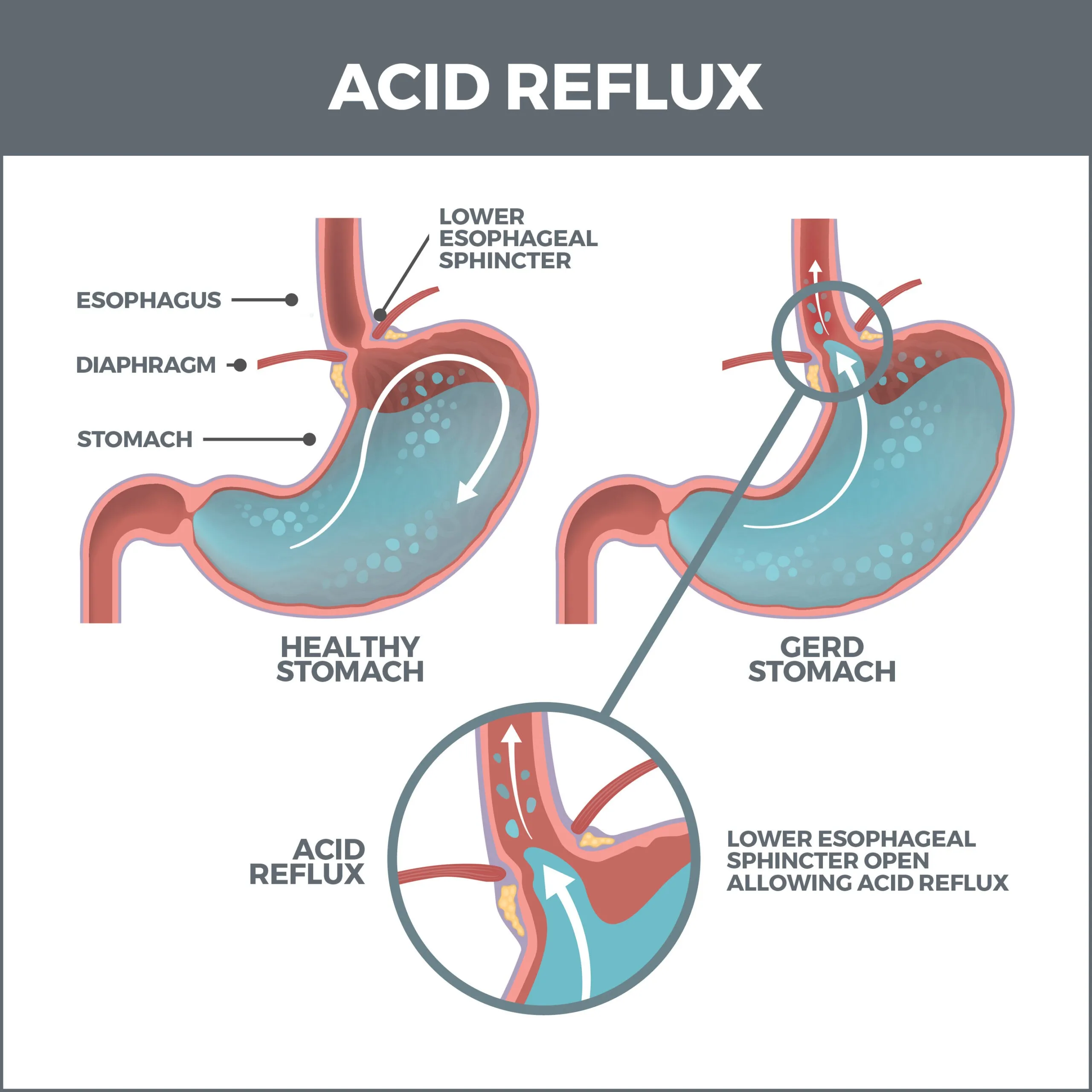
Acid reflux occurs when stomach acid flows back into the oesophagus, also known as the food pipe. Normally, a ring of muscle called the lower oesophageal sphincter (LES) acts as a valve, allowing food into the stomach while preventing its contents from flowing back up. When this muscle weakens or relaxes at the wrong time, stomach acid escapes into the oesophagus, irritating its lining and causing symptoms such as heartburn, a sour taste in the mouth, and regurgitation. While occasional acid reflux is common, symptoms that occur more than twice a week may indicate gastro-oesophageal reflux disease (GERD), a condition that can require medical treatment. Left untreated, frequent reflux can damage the oesophagus over time.
What Is the Difference Between Acid Reflux, Heartburn and GERD?
Although these terms are often used interchangeably, they do not mean exactly the same thing.
- Acid reflux is the movement of stomach acid into the oesophagus.
- Heartburn is the burning sensation in the chest that acid reflux commonly causes.
- GERD (gastro-oesophageal reflux disease) is a long-term condition in which acid reflux occurs repeatedly or causes complications.
In other words, acid reflux is the cause, heartburn is one of its symptoms, and GERD is the chronic condition that develops when reflux becomes persistent.
How Is GERD Diagnosed?
Doctors can often diagnose GERD based on your symptoms and medical history. If symptoms are severe, persistent, or do not improve with treatment, additional tests may be recommended.
These tests may include an upper endoscopy to examine the oesophagus and stomach, ambulatory pH monitoring to measure acid levels over 24 hours, oesophageal manometry to assess how well the muscles of the oesophagus work, or, in selected cases, a barium swallow to identify structural abnormalities.
The most appropriate test depends on your symptoms and medical history.
Common Symptoms of Acid Reflux
Symptoms vary from person to person. Some people experience only mild discomfort, while others develop symptoms that interfere with daily life.
Common symptoms include:
- A burning sensation in the chest after eating
- A sour or bitter taste in the mouth
- Food or stomach acid coming back into the throat or mouth
- Difficulty swallowing
- A chronic cough
- Hoarseness, especially in the morning
- A sore throat
- A sensation of a lump in the throat
- Bad breath
- Bloating or frequent burping
Symptoms often become worse after eating large meals, bending over, or lying flat shortly after eating.
What Causes Acid Reflux?
Acid reflux develops when the lower oesophageal sphincter does not close properly, allowing stomach acid to flow back into the oesophagus.
Several factors can increase the likelihood of this happening.
Eating Large Meals
Large meals stretch the stomach and increase pressure on the lower oesophageal sphincter, making reflux more likely.
Certain Foods and Drinks
Some foods can relax the valve between the stomach and oesophagus or increase acid production.
Common triggers include:
- Fried and fatty foods
- Spicy meals
- Chocolate
- Coffee
- Tea
- Fizzy drinks
- Alcohol
- Tomatoes and tomato-based products
- Citrus fruits
- Peppermint
Not everyone reacts to the same foods. Keeping a food diary can help you identify your personal triggers.
Excess Body Weight
Being overweight or obese increases pressure inside the abdomen, making it easier for stomach acid to move upward.
Pregnancy
Hormonal changes and pressure from the growing baby make acid reflux particularly common during pregnancy, especially in the later months.
Smoking
Smoking weakens the lower oesophageal sphincter and increases stomach acid production, making reflux symptoms more frequent.
Hiatus Hernia
A hiatus hernia occurs when part of the stomach moves through the diaphragm into the chest. This condition can make acid reflux more likely.
Certain Medications
Some medicines may contribute to reflux, including certain painkillers, calcium channel blockers, and some medications used to treat asthma or high blood pressure. Never stop taking prescribed medication without speaking to your doctor.
Stress
Stress does not directly cause acid reflux, but it can make symptoms feel worse and may encourage habits such as overeating or consuming trigger foods.
Risk Factors
- obesity
- pregnancy
- smoking
- older age
- hiatus hernia
- family history
How to Relieve Heartburn Quickly
Heartburn can be uncomfortable, but there are several ways to ease symptoms. While these methods may provide temporary relief, frequent heartburn should be evaluated by a healthcare professional.
1. Stay Upright
If heartburn starts after eating, avoid lying down. Sitting or standing upright helps keep stomach acid where it belongs and reduces the chance of reflux.
2. Drink Water
Taking a few sips of water may help wash acid back into the stomach and reduce irritation in the oesophagus. Avoid drinking large amounts at once, as this may worsen symptoms in some people.
3. Wear Loose Clothing
Tight belts, waistbands, and fitted clothing can increase pressure on the stomach and trigger reflux. Wearing loose-fitting clothes may help reduce discomfort.
4. Use Over-the-Counter Antacids
Antacids work by neutralising stomach acid and often provide quick relief. They are available without a prescription and are suitable for occasional heartburn. However, they should not become your long-term solution if symptoms occur regularly.
5. Try Alginates
Alginates form a protective barrier that floats on top of the stomach contents, helping prevent acid from flowing back into the oesophagus. Some products combine alginates with antacids for added relief.
Are Home Remedies Effective?
Many home remedies for acid reflux circulate online, but scientific evidence supporting them is limited.
For example:
- Milk may soothe symptoms temporarily for some people, but its fat content can worsen reflux in others.
- Baking soda can neutralise stomach acid, but regular use is not recommended because it contains high levels of sodium and may cause unwanted side effects.
- Apple cider vinegar is often promoted as a natural remedy, but there is little evidence that it helps. In some people, it may actually make symptoms worse.
If you experience frequent heartburn, it is better to identify the underlying cause than rely on unproven home remedies.
Foods to Eat if You Have Acid Reflux
Although no single diet works for everyone, choosing foods that are gentle on the digestive system may help reduce symptoms.
Foods that many people tolerate well include:
- Oatmeal
- Wholegrain bread
- Brown rice
- Bananas
- Melons
- Apples
- Leafy green vegetables
- Broccoli
- Green beans
- Lean chicken
- Turkey
- Fish
- Eggs
- Low-fat yoghurt
- Healthy fats in moderation, such as avocado
Eating slowly and chewing food thoroughly can also help improve digestion.
Foods That May Trigger Acid Reflux
Certain foods are more likely to trigger reflux, although individual responses vary.
Common trigger foods include:
- Fried foods
- Fatty meals
- Spicy dishes
- Chocolate
- Coffee
- Alcohol
- Carbonated drinks
- Tomatoes
- Citrus fruits
- Peppermint
- Onions
- Garlic
Rather than eliminating every potential trigger, keep track of your symptoms and identify which foods affect you personally.
Lifestyle Changes That Can Help Prevent GERD
Simple daily habits often make a significant difference, especially when practised consistently.
Eat Smaller Meals
Large meals increase pressure inside the stomach, making reflux more likely. Eating smaller portions throughout the day may reduce symptoms.
Avoid Eating Before Bed
Try to finish eating at least two to three hours before lying down or going to sleep. This gives your stomach time to empty.
Raise the Head of Your Bed
If symptoms occur mainly at night, raising the head of your bed by about 15 to 20 centimetres can help prevent stomach acid from travelling into the oesophagus while you sleep.
Using extra pillows is usually less effective because it bends your neck rather than lifting your upper body.
Maintain a Healthy Weight
If you are overweight, even modest weight loss may reduce pressure on your stomach and improve reflux symptoms.
Stop Smoking
Smoking weakens the lower oesophageal sphincter and increases acid reflux. Quitting smoking benefits not only your digestive health but also your heart and lungs.
Limit Alcohol
Alcohol can relax the lower oesophageal sphincter and irritate the lining of the oesophagus. Reducing your intake may lessen reflux episodes.
Manage Stress
Stress does not directly cause GERD, but it can worsen symptoms. Regular exercise, relaxation techniques, adequate sleep, and mindfulness may help reduce stress-related flare-ups.
Medications Used to Treat GERD
If lifestyle changes are not enough, your healthcare provider may recommend medication.
Antacids
Antacids neutralise stomach acid and provide fast relief. They are best for occasional symptoms rather than long-term treatment.
H2 Blockers
H2 receptor blockers reduce the amount of acid your stomach produces. They generally provide longer-lasting relief than antacids and may be recommended for mild to moderate symptoms.
Proton Pump Inhibitors (PPIs)
Medicines such as omeprazole, lansoprazole, and pantoprazole reduce stomach acid production more effectively than H2 blockers. Doctors commonly prescribe them for GERD, stomach ulcers, and inflammation of the oesophagus.
PPIs are effective when used appropriately, but they should be taken according to your healthcare provider’s instructions. Long-term use may not be suitable for everyone.
Can Acid Reflux Be Dangerous?
Occasional acid reflux is usually not a cause for concern. Many people experience heartburn from time to time, especially after eating a large meal or certain foods. In most cases, simple lifestyle changes or over-the-counter medication are enough to relieve symptoms.
However, acid reflux that occurs frequently or remains untreated can lead to complications. Persistent exposure to stomach acid can damage the lining of the oesophagus and affect your quality of life.
If you experience heartburn several times a week or your symptoms continue despite treatment, it is important to speak with a healthcare professional.
Possible Complications of GERD
When GERD is left untreated, repeated acid exposure can cause problems such as:
Oesophagitis
Oesophagitis is inflammation of the oesophagus caused by repeated contact with stomach acid. It can lead to pain, difficulty swallowing, and irritation.
Oesophageal Stricture
Long-term inflammation may cause scar tissue to form, narrowing the oesophagus. This can make swallowing difficult and may require medical treatment.
Barrett’s Oesophagus
In some people, prolonged acid reflux changes the cells lining the lower oesophagus. This condition, known as Barrett’s oesophagus, increases the risk of oesophageal cancer, although most people with Barrett’s oesophagus do not develop cancer.
Respiratory Problems
Stomach acid can sometimes reach the throat or airways, contributing to chronic cough, hoarseness, sore throat, or worsening asthma symptoms.
When Should You See a Doctor?
Occasional heartburn is common, but some symptoms should never be ignored.
Arrange an appointment with your doctor if you:
- Experience heartburn more than twice a week.
- Need antacids or acid-reducing medication regularly.
- Continue to have symptoms despite lifestyle changes.
- Frequently wake up at night because of reflux.
- Have symptoms that interfere with your daily activities.
Seek Medical Attention Immediately If You Notice:
Seek urgent medical care if you experience:
- Difficulty or pain when swallowing.
- Food becoming stuck when you swallow.
- Vomiting blood.
- Black or tar-like stools.
- Unexplained weight loss.
- Persistent vomiting.
- Severe dehydration caused by vomiting.
Never Ignore Chest Pain
Heartburn and a heart attack can sometimes feel similar.
Call your local emergency services immediately if you develop chest pain that:
- Feels like pressure, squeezing, or tightness.
- Spreads to your arm, shoulder, jaw, neck, or back.
- Occurs alongside shortness of breath.
- Is accompanied by sweating, dizziness, nausea, or fainting.
- Does not improve after resting.
Read More: Natural ways to boost brain power without caffeine
It is always safer to seek emergency medical care than to assume chest pain is caused by acid reflux.
Key Takeaways
- Occasional acid reflux is common and often improves with lifestyle changes.
- Frequent heartburn may be a sign of GERD.
- Avoiding trigger foods, eating smaller meals, and not lying down after eating can reduce symptoms.
- Seek medical advice if symptoms occur more than twice a week or you have warning signs such as difficulty swallowing or unexplained weight loss.
Conclusion
Acid reflux is a common condition that most people experience at some point in their lives. While occasional heartburn is usually harmless, frequent symptoms may indicate gastro-oesophageal reflux disease (GERD), which can lead to complications if left untreated.
Fortunately, many people can successfully manage acid reflux by identifying their triggers, eating smaller meals, maintaining a healthy weight, avoiding late-night eating, and using medications when recommended by a healthcare professional.
If your symptoms become frequent, severe, or difficult to control, do not ignore them. Early diagnosis and treatment can help prevent complications and improve your quality of life.
Frequently Asked Questions
What is the fastest way to relieve acid reflux?
Over-the-counter antacids often provide the quickest relief by neutralising stomach acid. Sitting upright, avoiding lying down after meals, and drinking small amounts of water may also help ease symptoms.
What foods should I avoid if I have acid reflux?
Many people find that fatty foods, spicy meals, chocolate, coffee, alcohol, fizzy drinks, tomatoes, citrus fruits, onions, and peppermint trigger their symptoms. However, triggers vary from person to person, so keeping a food diary can help identify your own.
Can acid reflux go away on its own?
Yes. Occasional acid reflux often improves without treatment, especially after avoiding trigger foods or making simple lifestyle changes. However, persistent or recurring symptoms should be assessed by a healthcare professional.
Is GERD the same as acid reflux?
No. Acid reflux is the backward flow of stomach acid into the oesophagus. GERD is a chronic condition in which acid reflux happens frequently or causes complications.
Can stress make acid reflux worse?
Although stress is not considered a direct cause of acid reflux, it may worsen symptoms or increase their frequency in some people. Managing stress through regular exercise, relaxation techniques, and adequate sleep may help reduce flare-ups.
Is milk good for acid reflux?
Milk may provide temporary relief for some people, but it is not a proven treatment. Full-fat milk can actually worsen symptoms in some individuals. If you choose to drink milk, low-fat or skimmed options may be less likely to trigger reflux.
Can acid reflux cause a sore throat?
Yes. Repeated exposure to stomach acid can irritate the throat and voice box, leading to a sore throat, hoarseness, a chronic cough, or the sensation of a lump in the throat.
Read More: When to see a doctor for bloating, gas and abdominal pain
Can acid reflux be cured?
There is no single cure for GERD, but most people can successfully control their symptoms through lifestyle changes, medication, and treatment of any underlying causes. Some people with severe GERD may require specialised medical procedures or surgery.
Medical Review
This article provides general educational information about acid reflux and GERD. It does not replace professional medical advice, diagnosis or treatment.


 Admin
Admin