 Admin
AdminA canker sore, also known as an aphthous ulcer, is a small, painful sore that develops inside the mouth. Although these ulcers can make eating, drinking, and talking uncomfortable, they are usually harmless and heal on their own within one to two weeks.
Many people experience canker sores at some point in their lives, and they often return without warning. Understanding what causes them and how to care for them can help reduce discomfort and prevent future outbreaks.
Canker Sores at a Glance
- Also called: Aphthous ulcers
- Contagious? No
- Usual healing time: 7–14 days
- Common symptoms: Painful white or yellow ulcer with a red border
- When to seek medical care: If an ulcer lasts longer than three weeks, recurs frequently, or is unusually large
What Is a Canker Sore?
A canker sore is a shallow ulcer that develops on the soft tissues inside the mouth, including the inside of the lips, cheeks, tongue, soft palate, or gums.
Unlike infections, canker sores are not contagious. You cannot spread them through kissing, sharing food, or drinking from the same cup.
Most canker sores appear as round or oval ulcers with a white, yellow, or grey centre surrounded by a red border. They may be small, but they can cause significant pain, especially when eating spicy, salty, or acidic foods.
Types of Canker Sores
Not all canker sores look the same. Healthcare professionals generally classify them into three main types.
Minor Aphthous Ulcers
Minor aphthous ulcers are the most common type. They are usually small, round or oval, and heal within one to two weeks without leaving a scar.
Major Aphthous Ulcers
Major aphthous ulcers are larger and deeper than minor ulcers. They can be more painful, may take several weeks to heal, and sometimes leave scarring after they disappear.
Herpetiform Ulcers
Despite the name, herpetiform ulcers are not caused by the herpes virus. They appear as clusters of many tiny ulcers that may merge into larger sores. Although less common, they can be particularly painful.
Canker Sore vs Cold Sore. What’s the Difference?
Many people confuse canker sores with cold sores, but they are different conditions.
| Canker Sore | Cold Sore |
| Develops inside the mouth | Usually appears on or around the lips |
| Not contagious | Highly contagious |
| Not caused by a virus | Caused by the herpes simplex virus (HSV) |
| Appears as an ulcer | Begins as fluid-filled blisters |
If your sore develops outside the mouth and forms blisters, it is more likely to be a cold sore.
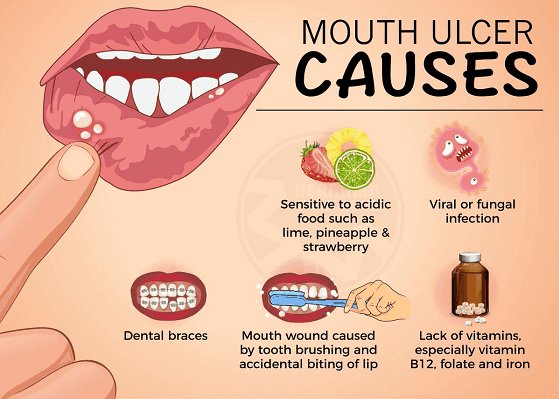
What Causes Canker Sores?
The exact cause of canker sores is not fully understood. However, researchers believe they develop as a result of several possible triggers, particularly in people who are already susceptible to them.
Common causes include:
Minor Mouth Injuries
Accidentally biting your cheek, brushing too hard, dental work, braces, or sharp foods such as crisps may damage the lining of the mouth and trigger an ulcer.
Stress
Emotional stress and lack of sleep appear to increase the likelihood of developing canker sores in some people.
Hormonal Changes
Some women notice mouth ulcers around their menstrual period because hormonal changes may increase sensitivity.
Certain Foods
Some people develop ulcers after eating:
- Citrus fruits
- Tomatoes
- Pineapple
- Spicy foods
- Salty snacks
- Nuts
- Chocolate
Keeping a food diary may help identify personal triggers.
Vitamin and Mineral Deficiencies
Low levels of vitamin B12, iron, folate, or zinc may contribute to recurrent mouth ulcers.
Toothpaste Ingredients
Some research suggests that toothpaste containing sodium lauryl sulphate (SLS) may trigger ulcers in susceptible individuals.
Medical Conditions
Frequent or severe mouth ulcers can sometimes be associated with conditions such as:
- Coeliac disease
- Crohn’s disease
- Ulcerative colitis
- Behçet’s disease
- A weakened immune system
Symptoms of a Canker Sore
Most canker sores develop gradually.
Common symptoms include:
- A tingling or burning sensation before the sore appears
- A small round or oval ulcer
- A white, yellow, or grey centre
- A bright red border
- Pain while eating, drinking, or talking
- Sensitivity to spicy, salty, or acidic foods
Stages of a Canker Sore
Most ulcers heal naturally within one to two weeks.
Early Stage
You may notice tingling, burning, or tenderness before the ulcer becomes visible.
Ulcer Stage
A painful white or yellow ulcer develops with a red border. This is usually the most uncomfortable stage.
Healing Stage
Pain gradually improves as new tissue forms over the ulcer. Most sores heal without leaving a scar.
How to Treat a Canker Sore
There is no instant cure, but treatment can reduce discomfort while the sore heals naturally.
Rinse with Warm Salt Water
A salt-water rinse may help keep the mouth clean and reduce irritation.
Mix half a teaspoon of salt into a glass of warm water, swish gently, and spit it out.
Maintain Good Oral Hygiene
Brush gently with a soft toothbrush to avoid irritating the ulcer.
Choose Soft Foods
Soft foods are less likely to irritate the sore.
Good choices include:
- Yoghurt
- Mashed potatoes
- Rice
- Soup
- Scrambled eggs
- Oatmeal
Avoid Trigger Foods
Avoid foods that make the ulcer more painful, including spicy, acidic, salty, and crunchy foods.
Over-the-Counter Treatments
A pharmacist may recommend:
- Pain-relieving mouth gels
- Antiseptic mouthwashes
- Protective pastes
- Corticosteroid preparations for mouth ulcers
Always follow the instructions provided with these products.
What Should You Avoid
Avoid practices that may delay healing, including:
- Picking or scraping the ulcer
- Smoking
- Drinking excessive alcohol
- Eating foods that repeatedly irritate the sore
- Using harsh mouthwashes containing alcohol if they increase discomfortHow Are Canker Sores Diagnosed?
- Most canker sores do not require medical tests because they usually heal on their own within one to two weeks. A healthcare professional can often diagnose them by examining your mouth and discussing your symptoms.
- However, further evaluation may be recommended if your ulcers are unusually large, keep returning, last longer than three weeks, or are accompanied by other symptoms such as weight loss, diarrhoea, or fatigue.
- Depending on your symptoms, your doctor may recommend blood tests to check for vitamin or mineral deficiencies, coeliac disease, inflammatory bowel disease, or other underlying conditions that can contribute to recurrent mouth ulcers.
Can Canker Sores Be Prevented?
Although they cannot always be prevented, these habits may reduce your risk:
- Brush gently using a soft toothbrush.
- Eat a balanced diet rich in vitamins and minerals.
- Stay hydrated.
- Reduce stress where possible.
- Identify and avoid personal food triggers.
- Consider using toothpaste without sodium lauryl sulphate if you experience frequent ulcers.
When Should You See a Doctor?
Most canker sores heal without treatment, but medical advice is recommended if:
- The ulcer lasts longer than three weeks.
- You develop unusually large ulcers.
- Mouth ulcers return frequently.
- Pain becomes severe.
- You have difficulty eating or drinking.
- You develop a fever or swollen glands.
- The ulcer shows signs of infection, such as increasing redness, swelling, or pus.
Persistent mouth ulcers should always be assessed because they can occasionally be a sign of a more serious condition.
Conclusion
Canker sores are common, painful mouth ulcers that usually heal without treatment. Although the exact cause is not always known, factors such as stress, minor injuries, certain foods, and nutritional deficiencies may increase the risk.
Simple self-care measures, including maintaining good oral hygiene, avoiding trigger foods, and using appropriate over-the-counter treatments, can help ease discomfort while the ulcer heals.
Read More: When to see a doctor for bloating, gas and abdominal pain
If your mouth ulcer lasts longer than three weeks, keeps returning, or is accompanied by other concerning symptoms, seek advice from a healthcare professional for further evaluation.
Frequently Asked Questions
How long do canker sores last?
Most canker sores heal within 7 to 14 days without treatment. Larger ulcers may take several weeks to heal.
Are canker sores contagious?
No. Canker sores are not contagious and cannot be spread through kissing, sharing utensils, or close contact.
What is the fastest way to heal a canker sore?
There is no instant cure, but salt-water rinses, pain-relieving gels, antiseptic mouthwashes, and avoiding irritating foods may help reduce discomfort while the sore heals naturally.
Can stress cause canker sores?
Stress does not directly cause canker sores, but it is a common trigger in people who are prone to developing them.
What foods should I avoid with a canker sore?
Avoid spicy foods, citrus fruits, tomatoes, salty snacks, and crunchy foods if they worsen your symptoms.
When should I worry about a mouth ulcer?
Read More: Natural ways to boost brain power without caffeine
See a healthcare professional if a mouth ulcer lasts longer than three weeks, keeps returning, becomes unusually large, or is accompanied by fever, difficulty swallowing, or signs of infection.
Disclaimer: This article is for educational purposes only and should not replace medical advice. If you have persistent or recurring mouth ulcers, consult a healthcare professional.


 Admin
Admin